
A practical guide to organic insect control for farmers across Sub-Saharan Africa — including when and how to use Insecten Hardnekkig Bio
When the Insects Win — and What to Do About It
Amara grows tomatoes and cucumbers on one acre in central Tanzania. Every season, the same battle: whiteflies coating the undersides of her leaves, aphids clustering on her growing tips, and thrips scarring fruit that should have been her highest earner at market. She has tried neem oil, sticky traps, and companion planting. They help — but when populations explode mid-season, she needs something stronger.
The problem most organic farmers face is not a lack of knowledge about gentle, preventive controls. It is knowing what to reach for when those controls are not enough — when the infestation has crossed the threshold where neem oil alone will not turn the tide, but a synthetic pesticide would compromise everything she has worked to build.
That gap is exactly what Insecten Hardnekkig Bio is designed to fill. It is a certified organic insecticide — tough enough to bring a serious infestation under control, safe enough to keep your organic programme intact.
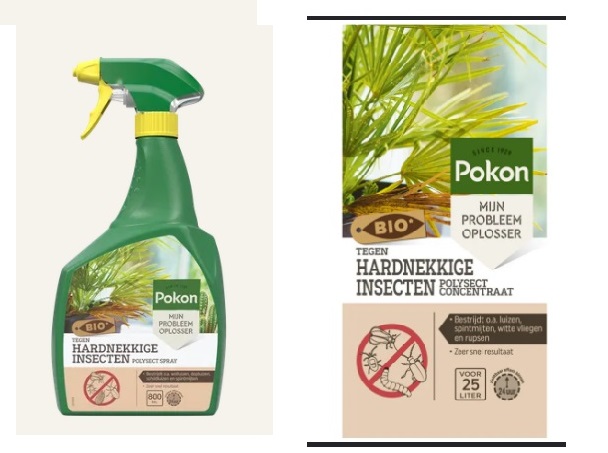
| NB: Bio Version vs. Conventional Version — Know the DifferenceInsecten Hardnekkig is available in two versions: a Bio (organic) version and a conventional version. These are NOT the same product. The conventional version contains synthetic pyrethroids — a chemical group that is NOT approved for organic farming. POFI stocks and recommends only the Bio version, which is certified organic under EU Regulation 2018/848 and uses natural pyrethrins derived from chrysanthemum flowers, combined with rapeseed oil. Always check the label before purchasing — look for the word ‘Bio’ and the organic certification mark. |
What Is Insecten Hardnekkig Bio?
Insecten Hardnekkig Bio is an organic-certified contact insecticide produced in the Netherlands. Its two active ingredients work together to deliver fast, broad-spectrum insect control while remaining safe for use on food crops right up to harvest:
| Active Ingredient | Source | How It Works |
| Pyrethrins (0.1 g/L) | Extracted from Chrysanthemum cinerariaefolium flowers — the same pyrethrum plant that has been cultivated in East Africa (particularly Kenya and Tanzania) for decades | Disrupts the nervous system of insects on contact, causing rapid knockdown. Breaks down quickly in sunlight and does not accumulate in the environment. |
| Rapeseed Oil (10 g/L) | Cold-pressed from rapeseed (canola) — a natural plant oil | Smothers soft-bodied insects and their eggs by blocking their breathing pores. Also helps the pyrethrins adhere to leaf surfaces for better coverage and contact. |
Together, these two ingredients deliver a one-two punch: the pyrethrins knock insects down fast, while the rapeseed oil suffocates eggs and nymphs that might otherwise survive. Furthermore, because pyrethrins break down rapidly in sunlight, minimal residue remains on harvested produce — making Insecten Hardnekkig Bio safe to use even close to harvest.
| Certified Organic Insecten Hardnekkig Bio is approved for use in organic farming under EU Regulation 2018/848. It contains no synthetic active ingredients and is compatible with certified organic production systems across Sub-Saharan Africa and worldwide. |
Which Insects Does It Control?
Insecten Hardnekkig Bio is a broad-spectrum contact insecticide, meaning it is effective against a wide range of insect pests on contact. It works particularly well against soft-bodied and small insects that are common threats on vegetable and fruit crops across Sub-Saharan Africa:
| Target Pest | Crops Most Affected | Why It’s a Priority |
| Aphids (Aphis gossypii, Myzus persicae) | Tomatoes, cucumbers, peppers, leafy greens | Transmit Cucumber Mosaic Virus within minutes of landing on a plant. Also weaken plants directly by sucking sap, causing leaf curl, stunted growth, and sooty mould from honeydew deposits. |
| Whitefly (Bemisia tabaci) | Tomatoes, cucumbers, beans, peppers | Transmits Tomato Yellow Leaf Curl Virus; sticky honeydew leads to sooty mould; populations build explosively in hot, dry conditions |
| Thrips (Thrips tabaci, Frankliniella occidentalis) | Tomatoes, onions, cucumbers, peppers | Transmits Tomato Spotted Wilt Virus; scars and distorts fruit; hides inside flowers making control difficult |
| Spider mites (Tetranychus urticae) | Tomatoes, cucumbers, beans, maize | Populations triple in a week in hot dry conditions; causes bronzing, leaf death, and defoliation |
| Leafhoppers | Tomatoes, maize, beans | Spread bacterial and viral diseases between plants; cause leaf curl and yellowing |
| Mealybugs | Tomatoes, peppers, cassava | Produce honeydew and sooty mould; weaken plants and reduce marketable yield |
When Should You Use Insecten Hardnekkig Bio?
Insecten Hardnekkig Bio works best as a targeted intervention when pest populations reach damaging levels that preventive organic controls alone cannot manage. In other words, think of it as the next step in your organic pest management programme — not the first.
Use It When:
- Neem oil and insecticidal soap have not brought populations under control after two to three applications, and damage is continuing to escalate
- You detect a sudden population explosion of aphids, whiteflies, or spider mites — particularly during the hot, dry season when populations can triple within days
- Thrips are present in flowers at more than 1–2 per flower, indicating a high-risk period for virus transmission and fruit scarring
- Whitefly populations are spreading visibly across the field and sticky traps are showing rapidly increasing catch numbers
- You need to protect a crop approaching harvest where insect damage could affect marketable quality of fruit in the final weeks of production
Continue Using Preventive Controls Alongside It:
Indeed, Insecten Hardnekkig Bio works best as part of an integrated programme. Therefore, continue using yellow and blue sticky traps, neem oil sprays, and reflective mulch alongside it. This combined approach reduces the frequency with which you need to apply the stronger product — and consequently helps prevent resistance build-up in pest populations.
How to Use Insecten Hardnekkig Bio: Application Guide
Mixing and Dilution
- Shake the bottle well before use — the rapeseed oil component can separate on standing
- Follow the label rate on the Pokon Insecten Hardnekkig Bio packaging for your specific crop and pest
- Mix with clean water in a clean sprayer — rinse the sprayer thoroughly after use to avoid oil residues affecting future applications
- Do not mix with other pesticides unless compatibility has been confirmed
Application Method
- Apply as a thorough foliar spray, covering both the upper and lower leaf surfaces — most pests shelter and feed on the undersides of leaves
- Ensure complete coverage of stems, growing tips, and any areas where pest colonies are visible
- For whitefly and thrips specifically, target the underside of leaves where nymphs and eggs are concentrated
- Apply enough spray volume to achieve thorough wetting of all leaf surfaces without excessive runoff
Timing — Critical for Bee Safety
Because pyrethrins can harm bees on direct contact, timing your application correctly is essential for protecting pollinators. Specifically:
- Always apply in the early morning or late evening when bees and other pollinators are not actively foraging
- Never spray on open flowers where bees may land and come into direct contact with the product
- If your crop is in full flower, consider delaying application until the flush of flowers has passed, or treat only the vegetative parts of the plant
- Pyrethrins break down rapidly in sunlight, so by the time bees are active the following morning, residue levels are significantly reduced — another reason why evening application is preferred
Frequency and Rotation
- Apply every 7–10 days while pest pressure remains high
- Rotate with other organic pest control methods (neem oil, insecticidal soap) between applications to slow resistance development
- As populations decline, reduce frequency and return to preventive controls as your primary management tool
| NB: Bee and Pollinator SafetyAlthough Insecten Hardnekkig Bio is certified organic and uses naturally derived active ingredients, pyrethrins are toxic to bees and other beneficial insects on direct contact. To protect pollinators: always apply in the early morning or late evening when bees are not active; never spray directly onto open flowers; and avoid treating crops in full bloom where possible. Pyrethrins break down rapidly in sunlight — residues are significantly reduced by the following morning, which is why evening application is the safest approach. Protecting pollinators is not just an environmental responsibility — it directly protects the fruit set and yield of your crop. |
Building Your Complete Organic Insect Control Programme
Insecten Hardnekkig Bio is most powerful as part of a layered organic pest management approach. Here is how a complete programme fits together for vegetable farmers across Sub-Saharan Africa:
| Stage | Tools | Purpose |
| Prevention (ongoing) | Crop rotation, companion planting (marigolds, basil), reflective silver mulch, insect-proof nursery nets | Reduce pest colonisation from the start of the season |
| Early detection | Yellow sticky traps (whitefly, aphids), blue sticky traps (thrips), regular field scouting every 2–3 days | Catch population build-up before it reaches damaging levels |
| First response | Neem oil spray (2% solution), insecticidal soap, strong water jets for spider mites | Control early infestations without stronger intervention |
| Escalation (when needed) | Insecten Hardnekkig Bio — applied in the evening, avoiding open flowers | Bring established infestations under control quickly while maintaining organic certification |
| Rotation | Alternate Insecten Hardnekkig Bio with neem oil and soap between applications | Prevent resistance build-up in pest populations |
| Post-season | Remove all crop debris; deep plough; clean and store traps and equipment | Break the pest cycle before the next season begins |
| Order Insecten Hardnekkig Bio from POFI Pure Organic Farming Inputs (POFI) stocks Pokon Insecten Hardnekkig Bio — certified organic insect control, shipped worldwide from the Netherlands. Pair it with our Organic Cucumber Seeds, Organic Vegetable Plant Food, and Epso Microtop for a complete organic growing programme. Contact our team for free advice on pest management for your specific crop and region, or order directly at pureorganicfarminginputs.com. |
Frequently Asked Questions
Is Insecten Hardnekkig Bio safe for organic farming?
Yes — the Bio version is certified organic under EU Regulation 2018/848. It uses natural pyrethrins extracted from chrysanthemum flowers and cold-pressed rapeseed oil as its active ingredients. However, it is important to note that only the Bio version carries this certification. The conventional version of Insecten Hardnekkig contains synthetic pyrethroids and is not approved for organic use.
Is it safe to use near harvest?
Yes. Pyrethrins break down rapidly in sunlight and leave no accumulation in plant tissue or soil. As a result, you can use Insecten Hardnekkig Bio close to harvest with minimal residue risk. Always check the pre-harvest interval stated on the product label and follow it precisely.
Will it harm bees?
Pyrethrins are toxic to bees on direct contact. To protect pollinators, always apply in the early morning or late evening when bees are not active, and avoid spraying directly onto open flowers. Because pyrethrins break down quickly in sunlight, the risk is significantly reduced by the time bees resume foraging the following day.
Which insects does it control?
Insecten Hardnekkig Bio is effective against a wide range of common crop pests including aphids, whiteflies, thrips, spider mites, leafhoppers, and mealybugs. It works best when applied to both the upper and lower leaf surfaces where insects feed and shelter.
Can I use it alongside neem oil and other organic controls?
Yes — in fact, rotating between Insecten Hardnekkig Bio and neem oil or insecticidal soap is the recommended approach. Rotating between different modes of action reduces the risk of pest populations developing resistance to any single product. Use Insecten Hardnekkig Bio as the stronger intervention when populations are high, then return to neem oil and soap as populations decline.
What is the difference between pyrethrins and pyrethroids?
Pyrethrins are natural compounds that chrysanthemum flowers produce — they carry organic farming approval and break down rapidly in the environment. Pyrethroids, on the other hand, are synthetic chemicals that manufacturers create to mimic pyrethrins — they persist longer, harm aquatic organisms more severely, and do NOT qualify for organic farming. The Bio version of Insecten Hardnekkig contains pyrethrins (organic); the conventional version contains pyrethroids (not organic). Consequently, always check the label before purchasing.
Also read: Organic Cucumber Diseases & Pests in Sub-Saharan Africa — Simona F1 Tomato Disease & Pest Management Guide — What Is Organic Farming? A Simple Guide for Beginners