
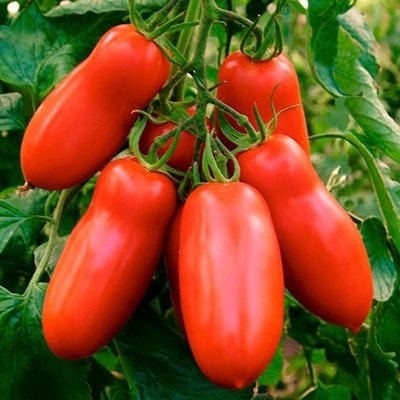
Joseph Ssemakula has been growing tomatoes on two acres outside Masaka, Uganda for eleven years. He has tried five different varieties. Last season, he switched to Shatrah F1 tomato seeds — and harvested more marketable fruit in one season than in any two previous seasons combined.
“The plants just kept going,” he says. “Even in the hot weeks when my neighbours’ tomatoes were dropping flowers, mine kept setting fruit.”
Joseph’s experience is not unusual. Across Sub-Saharan Africa, farmers growing Shatrah F1 tomato seeds consistently report the same thing: this variety performs when others don’t. Here is why.
Why Shatrah F1 Tomato Seeds Are Built for African Conditions
Most commercial tomato varieties were originally developed for temperate European climates. They perform well in controlled trial conditions — and struggle the moment a Ugandan or Nigerian farmer plants them into 34°C heat, unpredictable rainfall, and sandy tropical soils.
Shatrah F1 tomato seeds are different. The variety’s genetics are specifically selected for heat tolerance, allowing the plant to maintain growth, flowering, and fruit set even when temperatures push above 30°C.
This matters more than most farmers realise. Research shows that temperatures above 35°C during flowering and fruit set cause dramatic yield losses in standard tomato varieties — a problem that heat-tolerant F1 hybrid genetics directly address. When your neighbours’ plants are dropping flowers mid-season, a field of Shatrah F1 keeps producing.
For a commercial farmer selling at market, that difference is not just agronomic — it is financial.
Three Things Farmers Notice After Switching to Shatrah F1
Farmers who move from open-pollinated varieties to Shatrah F1 tomato seeds tend to notice the same three changes within one season:
- Faster, stronger establishment after transplanting. Shatrah F1 recovers from transplant shock quickly, establishing roots and beginning vigorous growth without the two-week recovery period that weakens many susceptible varieties.
- Lower disease management costs. Shatrah F1’s disease resistance means fewer spray rounds needed to protect the crop — freeing up money that would otherwise go to fungicide and nematicide inputs.
- More consistent, market-ready fruit. Firm, round, uniform tomatoes that buyers at fresh markets and wholesale depots actively prefer. Consistency at harvest means better prices and repeat buyers.
| “I used to spray every week just to keep the crop alive. With Shatrah F1 I spray less, lose less, and sell more. I will not go back to the old seeds.” — Smallholder tomato farmer, Central Uganda |
Shatrah F1 Tomato Seeds vs Open-Pollinated Varieties: The Real Cost Comparison
Many farmers choose open-pollinated (OP) seeds because they appear cheaper at the point of purchase. But the full cost of an OP crop tells a different story.
Tomato farmers across Sub-Saharan Africa lose between 20% and 80% of their crop to disease every season when management is insufficient — a finding documented repeatedly across Uganda, Kenya, Tanzania, and Ethiopia (Muthoni et al., 2010). OP varieties, being more susceptible, sit at the higher end of that loss range. The fungicide, nematicide, and labour costs required to protect an OP crop through a full season can easily exceed the price difference between OP seeds and Shatrah F1 tomato seeds.
F1 hybrids also deliver something OP varieties simply cannot: uniformity. Shatrah F1 tomato seeds produce plants that ripen at consistent rates and deliver fruit of consistent size and shape. That predictability is worth real money when you are selling to buyers who need reliable supply.
The farmers who calculate the true cost — seed price plus inputs plus losses — almost always find that Shatrah F1 tomato seeds pay for themselves within a single season.
How to Get the Best Yield from Shatrah F1 Tomato Seeds
Shatrah F1 is forgiving and resilient, but it rewards good management. Follow these practices for the strongest possible harvest:
- Raise seedlings under insect-proof net. Especially important in areas with high whitefly pressure — whiteflies spread Tomato Yellow Leaf Curl Virus, which has no cure. Starting clean gives Shatrah F1 the best foundation.
- Transplant at 15–20 cm height. This is typically 21–28 days after sowing. Transplant in early morning or late afternoon to reduce heat stress during establishment.
- Space at 60–70 cm between plants, 90–100 cm between rows. Research confirms that tomatoes spaced at 60 cm and above produce significantly higher yields per plant due to better airflow and reduced competition.
- Irrigate steadily — drip irrigation where possible. Keeps leaves dry, reduces fungal pressure, and makes efficient use of water during dry spells.
- Feed with a balanced basal fertiliser at transplanting, then top-dress at flowering. A foliar micronutrient product like Epso Microtop — available from POFI — improves fruit quality and colour during the ripening stage.
- Stake at transplanting, not after. Early staking prevents stem damage and keeps the canopy open from the start.
What Are Suckers — and Why Removing Them Matters for Shatrah F1
One task that trips up many tomato farmers — including experienced ones — is sucker removal. If you have ever read “remove suckers regularly” on a seed guide and wondered exactly what that means, here is a clear explanation.
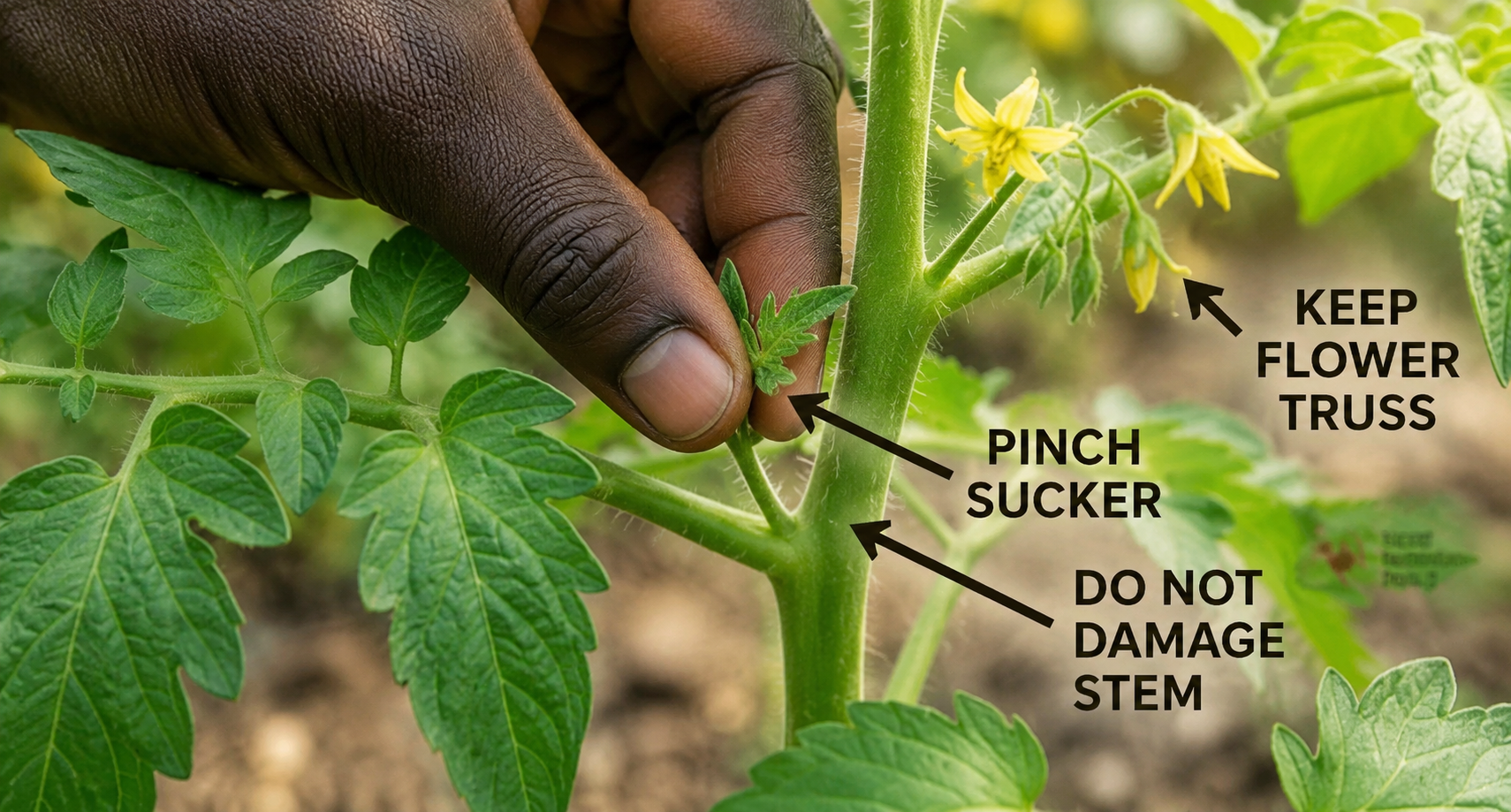
| What is a sucker? A sucker is a small shoot that grows in the “armpit” — the V-shaped junction between the main stem and a side branch of the tomato plant. Left alone, it grows into a full branch, taking energy away from fruit and making the canopy dense and humid.Why does it matter? A crowded canopy traps moisture around the plant. That moisture creates ideal conditions for fungal diseases — Early Blight, Grey Mould, and Late Blight are all far worse in dense, poorly ventilated canopies. Studies confirm that sucker removal improves light penetration, increases airflow, and directly reduces disease incidence.When to remove suckers? Remove them while small — under 3 cm long. At that size, pinch them off cleanly with your fingers. Waiting until they are large means a bigger wound that becomes a disease entry point. Check for new suckers every time you scout the field. |
What is a Tomato Sucker ?
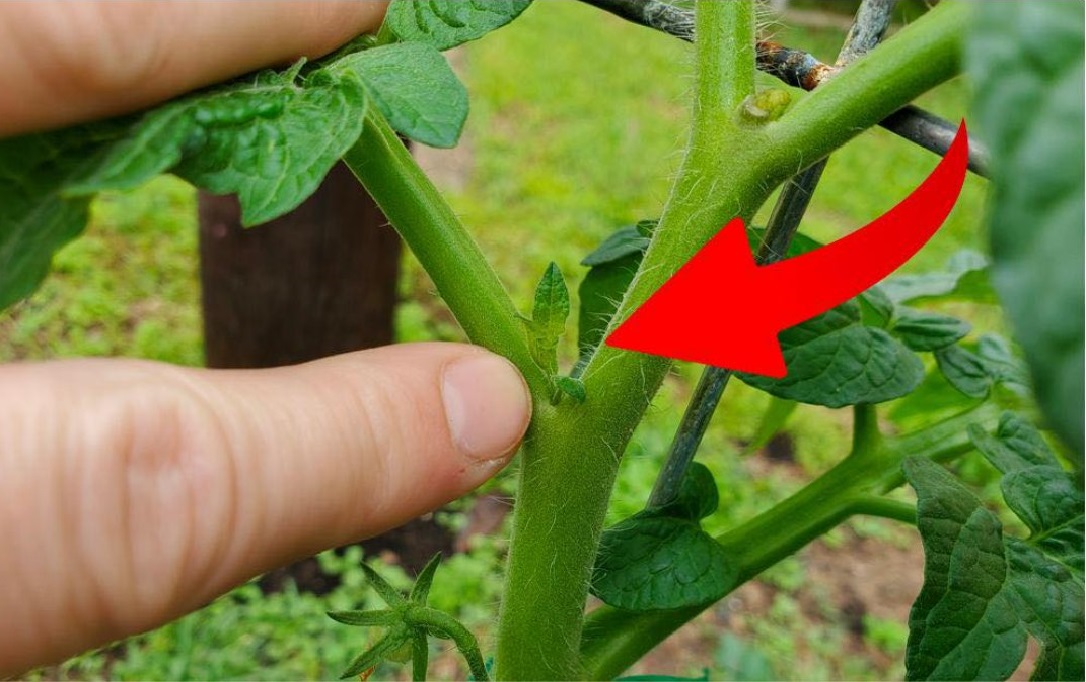
Remove suckers while they’re still young
Scout your field at least twice a week. Check the undersides of leaves, the base of stems, and developing fruit. Catching Early Blight, Bacterial Wilt, or Tuta absoluta (tomato leaf miner) early is the difference between a manageable problem and a lost crop.
Frequently Asked Questions About Shatrah F1 Tomato Seeds
Can I save seeds from my Shatrah F1 plants for next season?
No — and this is important to understand before you plant. As an F1 hybrid, Shatrah F1 does not breed true in the next generation. Seeds saved from the harvest will produce plants with unpredictable traits, inconsistent yields, and reduced disease resistance. For reliable results every season, always order fresh certified Shatrah F1 tomato seeds from a trusted supplier like POFI.
Is Shatrah F1 suitable for smallholder farmers, or only large commercial farms?
Shatrah F1 tomato seeds are well suited to both. The variety’s disease resistance and stress tolerance reduce the management burden — making it easier to grow successfully even with limited inputs. Smallholder farmers in Uganda and across East Africa who have switched from OP varieties consistently report better results with Shatrah F1.
What is the difference between Shatrah F1 and Simona F1 tomato seeds?
Both are high-performance F1 hybrid tomatoes available from POFI. Simona F1 carries certified, documented resistance to Fusarium Wilt, Verticillium Wilt, Tomato Mosaic Virus, and Root-Knot Nematodes — making it the stronger choice for fields with a known disease history in the soil. Shatrah F1 tomato seeds are bred with an emphasis on heat tolerance and open-field performance in hot, tropical climates. If you are not sure which is right for your farm, contact POFI — the team will help you decide based on your specific conditions.
How long does Shatrah F1 take from transplanting to first harvest?
Approximately 60–75 days from transplanting under good growing conditions, though this varies with temperature, soil health, and management. In very hot conditions fruit development can be slightly faster. Confirm the precise figure with your seed supplier or POFI at the time of purchase.
Does Shatrah F1 grow well in a greenhouse or only outdoors?
Shatrah F1 tomato seeds are specifically suited to open-field production in hot and tropical climates — that is where its stress-tolerant genetics give the biggest advantage. It can be grown under cover, but its heat tolerance makes it especially valuable for farmers who cannot afford greenhouse infrastructure.
Order Shatrah F1 Tomato Seeds from POFI — Worldwide Shipping
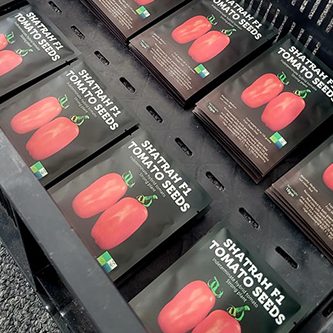
Every season, farmers who wait too long to order miss the planting window. If Shatrah F1 is the right variety for your farm, the best time to order is now.
Pure Organic Farming Inputs (POFI) ships genuine, certified Shatrah F1 tomato seeds worldwide from our warehouse in Alkmaar, the Netherlands. Every packet is carefully packed for safe international transit. Your seeds arrive protected and ready to plant — whether your farm is in Uganda, Kenya, Zambia, Nigeria, Ghana, or anywhere else in the world.
Order today and get free growing advice from our team included with every purchase. We know these varieties inside out — and we want your season to succeed.
- pureorganicfarminginputs@protonmail.com
- +31 6 49655575
- Amerlandstraat 83, Alkmaar, Noord Holland, The Netherlands
Stock is limited each season. Contact us today to confirm availability and place your order.
References
Barchenger, D.W. et al. (2021). Accelerating the Development of Heat Tolerant Tomato Hybrids through a Multi-Traits Evaluation of Parental Lines. Agronomy, 11(10), 2024. https://www.ncbi.nlm.nih.gov/pmc/articles/PMC8539001/
Scott, J.W. et al. (2004). Genetics of heat tolerance for floral and fruit set in tomato. Journal of the American Society for Horticultural Science, 129(2), pp. 193–197. https://www.researchgate.net/publication/268341561
Muthoni, J., Shimelis, H. and Melis, R. (2010). Tomato production in Uganda: constraints and opportunities for improved cultivar development. African Journal of Agricultural Research, 5(21), pp. 2935–2945.
Perez, K. et al. (2017). Connecting smallholder tomato producers to improved seed in West Africa. Agriculture & Food Security, 6(1), p. 49. https://agricultureandfoodsecurity.biomedcentral.com/articles/10.1186/s40066-017-0118-4
Ahmad, H. et al. (2017). Influence of sucker pruning and old leaves removal on growth and yield of cherry tomato. Journal of Bioscience and Agriculture Research, 12(2), pp. 1048–1053. https://doi.org/10.18801/jbar.120217.128
Olasantan, F.O. (2007). Effect of pruning and spacing on growth and yield of tomato. Cited in: Oladele, A.T. et al. (2025). Pruning and population density as smart solution to tomato production. International Journal of Agriculture and Applied Research, 26(5), pp. 99–112.
CABI (2025). Tuta absoluta (South American tomato leafminer) — Datasheet. Centre for Agriculture and Bioscience International. https://www.cabi.org
CABI (2025). Ralstonia solanacearum (bacterial wilt of tomato) — Datasheet. Centre for Agriculture and Bioscience International. https://www.cabi.org
Food and Agriculture Organization (FAO) (2016). Integrated Pest Management for Tomato. FAO Plant Production and Protection Division. Rome: FAO. https://www.fao.org
National Agricultural Research Organisation (NARO) Uganda. Tomato Production and Disease Management Guide. Kampala: NARO. https://www.naro.go.ug
EPPO Global Database (2025). Phytophthora infestans, Fusarium oxysporum f.sp. lycopersici, Bemisia tabaci — Pest Datasheets. European and Mediterranean Plant Protection Organization. https://gd.eppo.int
Hazera Genetics. Simona F1 Tomato — Variety Data Sheet. Hazera Seeds. https://www.hazera.com
Pure Organic Farming Inputs (POFI) (2025). Shatrah F1 Seeds — Product Listing. Kampala, Uganda. https://www.facebook.com/POFIUganda