

Introduction
Simona F1 is one of the highest-performing hybrid tomato varieties available to farmers across Sub-Saharan Africa. Whether you are farming in Uganda, Kenya, Tanzania, Rwanda, Zambia, Ethiopia, or Nigeria, this guide gives you a practical, proven roadmap to grow Simona F1 tomatoes successfully — from seed to harvest.
This guide is written for both commercial farmers and smallholder farmers growing under open-field or rain-fed conditions typical across the region.
Simona F1 Quick Reference — Sub-Saharan Africa
| Characteristic | Detail |
| Crop Type | Indeterminate hybrid tomato (requires staking) |
| Best Growing Regions | Highlands & mid-altitude zones (1,000–2,200 m a.s.l.) |
| Optimal Temperature | 18°C – 30°C (day); above 15°C at night |
| Annual Rainfall Needed | 600–1,200 mm or supplementary irrigation |
| Days to Germination | 7–10 days |
| Days to Transplanting | 21–28 days after sowing |
| Days to First Harvest | Approximately 70–85 days after transplanting |
| Fruit Weight | 160–180 grams |
| Recommended Spacing | 60 cm between plants; 100 cm between rows |
| Yield Potential | High — multiple boxes per plant under good management |
Step 1: Choosing the Right Location and Season
Ideal Climate Conditions
Simona F1 performs best in warm, sunny conditions with moderate humidity. Across Sub-Saharan Africa, the best results come from:
- Highland and mid-altitude zones (1,000–2,200 metres above sea level) such as the highlands of Uganda, Kenya, Ethiopia, and Tanzania
- Temperatures between 18°C and 30°C during the day — avoid growing during extreme heat spells above 35°C as this reduces fruit set
- Nights above 15°C — cold nights below 13°C can cause blossom drop and reduce fruit set; growth slows significantly below 10°C
- Moderate humidity — very high humidity encourages fungal disease; ensure good field ventilation
Best Planting Seasons
Timing your planting to the local rain calendar is critical:
- Uganda / Rwanda / Burundi: March–May (Long Rains) and September–November (Short Rains). Transplant at the start of the rains.
- Kenya: March–July (Long Rains) and October–December (Short Rains) planting windows. Dry season planting with irrigation gives the most reliable commercial results and the best disease control.
- Tanzania: March–May (Masika rains) in coastal regions; year-round with irrigation in the Arusha/Moshi highlands.
- Ethiopia: March–May (Belg rains) and September–November in the highlands. The dry Bega season (December–February) allows year-round production with irrigation in the rift valley lowlands.
- Nigeria / West Africa: October–January dry season planting with supplementary irrigation gives the best disease outcomes.
- Zambia: May–October (Dry Season) is the prime planting window — the highest yields are achieved under irrigation during this period. August–October is the peak commercial window. Avoid the rainy season (November–March) as excess moisture significantly increases fungal disease pressure and reduces yields.
Step 2: Nursery Preparation and Seed Sowing
Why a Good Nursery Matters
A healthy seedling produces a healthy plant. Rushing the nursery stage is one of the most common mistakes African tomato farmers make. Take your time here — it pays off at harvest.
Nursery Site Selection
- Choose a site with partial shade during the hottest part of the day
- Ensure good drainage — waterlogged nurseries cause damping-off disease
- Use raised nursery beds 1–1.2 metres wide and any practical length
- Protect the nursery with a shade net (30–50% shade) or banana leaves if nets are unavailable
Nursery Growing Medium
Prepare a well-draining, fertile growing medium:
- Option 1 — Field Mix: 2 parts topsoil + 1 part well-decomposed compost + 1 part river sand
- Option 2 — Tray Mix: Commercial seedling tray mix (coco peat + perlite) — best for greenhouse nurseries
Important: Sterilise nursery soil by solarising (cover with clear plastic for 2–3 weeks before sowing) to kill soil-borne pathogens and weed seeds.
Sowing Simona F1 Seeds
- Sow seeds 0.5–1 cm deep — do not plant too deep
- Spacing in trays: 1 seed per cell in seedling trays, or 5 cm apart in open beds
- Water gently using a watering can with a fine rose — avoid washing seeds out
- Cover lightly with fine compost or dry grass to retain moisture until germination
- Germination occurs in 7–10 days at optimal temperature (24°C–29°C)
Nursery Management
- Watering: Water once or twice daily in the morning — keep the medium moist but not waterlogged
- Fertilising seedlings: Apply a dilute balanced liquid fertiliser (e.g. 20:20:20 NPK) at half strength from Day 14 onwards, once per week
- Hardening off: From Day 18, gradually reduce shade and reduce watering to toughen seedlings before transplanting
- Watch for damping-off: If seedlings collapse at soil level, improve drainage immediately and apply a copper-based fungicide drench
Step 3: Land Preparation
Soil Requirements
Simona F1 thrives in:
- Well-drained loam or sandy-loam soils — avoid heavy clay soils that waterlog
- Soil pH 6.0–6.8 — test your soil and apply agricultural lime if pH is below 5.5
- Rich organic matter — soils with good organic content produce significantly higher yields
Land Preparation Steps
- Clear the field — remove all crop residues and weeds from previous seasons
- Deep plough or dig to 30–40 cm depth — this breaks up compaction and improves root penetration
- Apply base compost or manure: 10–20 tonnes of well-rotted farmyard manure per hectare, incorporated into the soil
- Form raised beds (30–40 cm high) — especially important in areas with heavy seasonal rainfall to prevent waterlogging
- Apply lime if needed and leave soil to rest for at least 2 weeks before planting
Step 4: Transplanting Simona F1 Seedlings
When to Transplant
Transplant seedlings when they are 21–28 days old and have 4–6 true leaves. Do not wait too long — older seedlings transplant poorly and produce lower yields.
Transplanting Procedure
- Transplant in the late afternoon or on a cool, overcast day to reduce transplant shock
- Recommended spacing: 60 cm between plants within a row; 100 cm between rows (approximately 16,000–17,000 plants per hectare)
- Dig planting holes large enough to accommodate the root ball without bending roots
- Apply a starter fertiliser (DAP or NPK 17:17:17) at 1 tablespoon per hole, mixed into the soil at the base
- Plant at the same depth as in the nursery — planting too deep encourages stem rot
- Water immediately after transplanting to settle the soil around roots
- Apply mulch (dry grass, straw, or black polythene mulch) around plants to conserve moisture and suppress weeds
Step 5: Staking and Training
Simona F1 is an indeterminate variety — it will keep growing taller throughout the season. Staking is not optional; it is essential.
- Install stakes or bamboo poles (1.5–2 metres tall) within one week of transplanting
- Use sisal twine or soft ties to loosely secure the main stem to the stake every 20–30 cm as the plant grows
- String trellis systems work well for large commercial farms — run horizontal wires between end poles and tie plants along the wire
- Pruning (optional but recommended for commercial farms): Remove suckers (side shoots that grow between the main stem and a branch) to maintain 1–2 main stems. This improves airflow and fruit size
Step 6: Irrigation and Water Management
Tomatoes need consistent moisture — irregular watering causes blossom end rot and fruit cracking, which reduces marketable yield significantly.
Irrigation Schedule
- Seedling stage (0–3 weeks after transplanting): Water every 2 days — young roots cannot reach deep moisture
- Vegetative stage (3–6 weeks): Water every 3 days, or twice weekly — increase as plants grow larger
- Flowering and fruit set (6–10 weeks): Critical stage — water consistently every 2–3 days. Do not let the soil dry out during flowering
- Fruit development and ripening (10 weeks to harvest): Reduce watering slightly as fruits approach full ripeness to concentrate flavour and improve firmness
Irrigation Methods
- Drip irrigation — most efficient; delivers water directly to the root zone; reduces leaf wetness and fungal disease risk
- Furrow irrigation — common on smallholder farms; water the base of plants, never overhead
- Avoid overhead sprinkler irrigation — wet leaves encourage Early Blight, Late Blight, and other foliar diseases
Step 7: Fertilisation Programme
Simona F1 is a high-yielding variety that responds strongly to good nutrition. A structured fertilisation programme significantly increases yield and fruit quality.
| Growth Stage | Recommended Fertiliser Application |
| At planting (basal) | DAP (18:46:0) or NPK 17:17:17 — 1 tablespoon per planting hole. Supplement with Green Boots Vegetables & Herbs Plant Food mixed into the planting hole as a base organic feed — promotes healthy root establishment from day one. |
| 2–3 weeks after transplanting | CAN (Calcium Ammonium Nitrate) or Urea — side-dress 1 tablespoon per plant to boost vegetative growth. Also apply Green Boots Vegetables & Herbs Plant Food as a top dressing around each plant to enrich the soil and support vigorous early growth. |
| 4–5 weeks (pre-flowering) | NPK 17:17:17 or a balanced compound fertiliser — 2 tablespoons per plant |
| Flowering & fruit set | Potassium-rich fertiliser (e.g. NPK 12:12:36 or Muriate of Potash) — promotes fruit size, colour, and firmness. Foliar spray with Epso Microtop (magnesium, sulfur, boron, and manganese) at this stage — boron directly supports flower and fruit formation, and magnesium boosts photosynthesis and root activity during this critical window. |
| Fruit development | Foliar spray: calcium + boron (prevents blossom end rot and improves skin strength). Continue Epso Microtop foliar applications every 10–14 days — the magnesium and sulfur content helps maintain healthy leaf function and maximises fruit fill and skin quality through to harvest. |
| Throughout season | Liquid organic fertiliser or compost tea — every 2 weeks as a supplement. POFI’s Organic Vegetable Plant Food is ideal here — apply every 2 weeks as a liquid feed to continuously replenish soil organic matter, support beneficial soil microbes, and give plants a steady background supply of nutrients between the main NPK applications. |
Tip: Always water plants before applying granular fertiliser to avoid root burn. Never apply fertiliser to dry, stressed plants.
Recommended POFI Supplement Products for Simona F1
Green Boots Vegetables & Herbs Plant Food — A premium organic fertiliser packed with NPK to build healthy roots, vibrant foliage, and high yields. Use at planting and as a top dressing during vegetative growth. Safe for the environment and ideal for organic farming.
Epso Microtop — An immediately effective foliar fertiliser containing magnesium, sulfur, boron, and manganese. Apply as a foliar spray from flowering through fruit development. Boron supports fruit set; magnesium drives photosynthesis; sulfur increases nitrogen efficiency. Completely water-soluble and approved for organic farming.
Organic Vegetable Plant Food — A natural organic supplement to feed soil health throughout the season. Apply every 2 weeks as a liquid feed alongside your main NPK programme to replenish organic matter, support beneficial soil microbes, and deliver steady background nutrition from transplanting to harvest.
All three products are available from Pure Organic Farming Inputs (POFI). Contact POFI via Facebook or email to order.
Step 8: Pest and Disease Management
Common Diseases in Sub-Saharan Africa and Management
- Early Blight (Alternaria solani): Brown spots with concentric rings on lower leaves. Apply Mancozeb or Chlorothalonil fungicide. Ensure good plant spacing for airflow.
- Late Blight (Phytophthora infestans): Water-soaked lesions on leaves and fruit, white mould on undersides. Apply Metalaxyl-based fungicide immediately. Remove and destroy infected material.
- Fusarium Wilt: Yellowing and wilting of one side of the plant. Simona F1 has built-in resistance — rotate crops and avoid waterlogging to minimise risk.
- Bacterial Wilt (Ralstonia): Sudden, rapid wilting without yellowing. No chemical cure — practice 3-year crop rotation; avoid infested soil.
- Tomato Mosaic Virus (ToMV): Mosaic patterns on leaves, stunted growth. Simona F1 is resistant to ToMV. Control aphid vectors to prevent other viruses.
Common Pests and Management
- Aphids (Myzus persicae): Cluster on young shoots; transmit viruses. Apply insecticidal soap, neem oil, or systemic insecticide (Imidacloprid). For organic farmers, Insecten Hardnekkig Bio (pyrethrin + rapeseed oil) is approved for organic farming and effective against aphids within 24 hours. For conventional farms with persistent infestations, Insecten Hardnekkig (systemic, flupyradifurone-based) provides up to 8 weeks of protection. Simona F1 has tolerance to Myzus persicae.
- Tomato Leaf Miner (Tuta absoluta): Tiny caterpillars mine leaves and bore into fruits. Use pheromone traps, remove affected leaves, apply Spinosad or Chlorantraniliprole. Insecten Hardnekkig Bio is also effective against caterpillars and can be used as part of an organic spray programme.
- Whitefly: Vector of Tomato Yellow Leaf Curl Virus (TYLCV). Use yellow sticky traps, neem oil, or systemic insecticides. Insecten Hardnekkig (systemic) is particularly effective against whitefly and scale insects on vegetables; apply at first sign of infestation. Install insect-proof nets in greenhouses.
- Root-Knot Nematodes: Cause gall formations on roots. Simona F1 has nematode resistance. Rotate with non-host crops such as maize or cabbage. Apply nematicides if pressure is severe.
Integrated Pest Management (IPM) Principles
- Rotate tomatoes with non-solanaceous crops every season (maize, beans, onions)
- Remove and destroy diseased plant material — never compost it
- Scout fields twice weekly, especially during flowering and fruiting
- Spray preventively with copper-based fungicides during high-humidity periods
- Use certified, clean seed from trusted suppliers to avoid seed-borne diseases
Recommended POFI Pest Control Products for Simona F1
Insecten Hardnekkig Bio (Organic) — A biological insecticide made from pyrethrin and rapeseed oil, certified for use in organic farming. Effective against aphids, whitefly, spider mites, caterpillars (including Tuta absoluta), and scale insects. Results are visible within 24 hours. Apply in the early morning or evening; avoid application when temperatures exceed 25°C. Mix the concentrate with water and spray both upper and lower leaf surfaces, stems, and trunk until run-off. Suitable for use from transplanting through to harvest. Available from POFI.
Insecten Hardnekkig (Conventional/Systemic) — A powerful systemic insecticide for conventional farms dealing with persistent or heavy pest infestations. Works within 1 hour and provides up to 8 weeks of protection on vegetables. Effective against aphids, whitefly, scale insects, and mealybugs. Its systemic action means it is absorbed into the plant and works against insects that feed on plant sap, while being selective enough to be gentler on beneficial insects. Use when pest pressure is high and organic options alone are insufficient. Available from POFI.
Which product should I use? Use Insecten Hardnekkig Bio as your first line of defence and for organic-certified farming. Switch to or combine with Insecten Hardnekkig (Conventional) when facing persistent, high-pressure infestations. Both products are available from Pure Organic Farming Inputs (POFI) — contact POFI via Facebook or email to order.
Step 9: Harvesting Simona F1 Tomatoes
When to Harvest
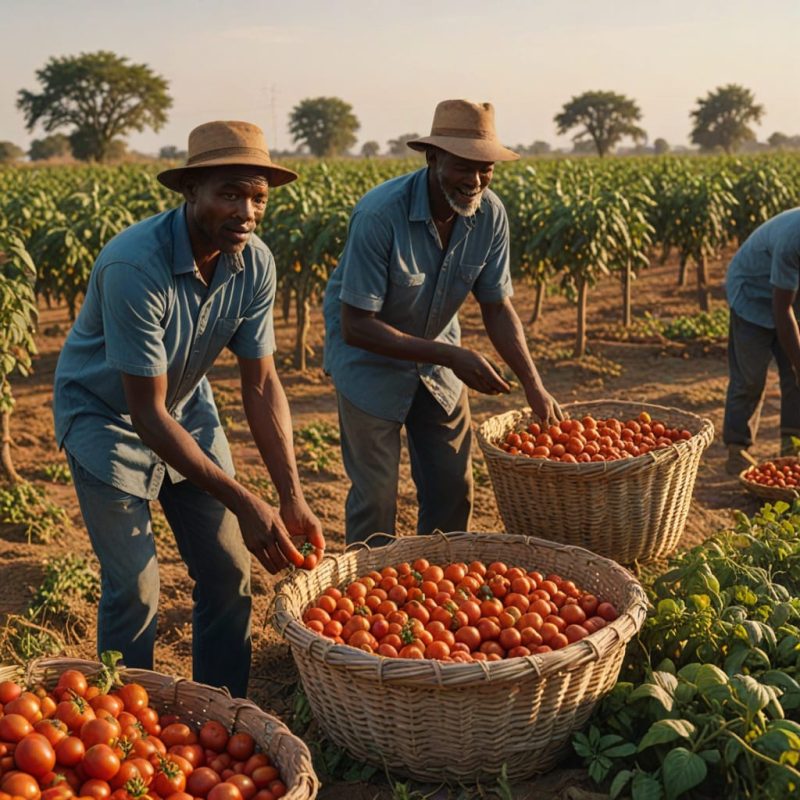
Simona F1 reaches first harvest approximately 70–85 days after transplanting, depending on altitude, temperature, and management. Harvest at the right stage for your market:
- Mature green stage: Harvest if fruits will travel more than 100 km to market — they ripen in transit and arrive in good condition
- Pink to light red stage: Ideal for local markets and supermarkets — maximum shelf life
- Full red stage: Harvest for processing, local sale, or restaurants where immediate consumption is intended
Harvesting Tips
- Harvest in the early morning when temperatures are cool — fruits are firmer and last longer
- Use clean, sharp secateurs or harvest by hand — do not pull fruits as this damages the plant
- Handle fruits gently — Simona F1 is firm but bruising reduces market value
- Harvest every 2–3 days during peak production — do not leave ripe fruits on the plant as they attract pests and disease
- Sort and grade fruits at the field before packing — remove damaged, cracked, or diseased fruits
Post-Harvest Storage
- Do not refrigerate unripe tomatoes — cold storage below 13°C damages flavour and texture
- Store in a cool, shaded, well-ventilated store — temperatures of 13°C–18°C extend shelf life significantly
- Single-layer stacking in crates is best — multi-layer stacking bruises lower fruits
Yield Expectations for Simona F1 in Sub-Saharan Africa
Under good management (recommended spacing, irrigation, fertilisation, and pest control), Simona F1 consistently delivers high yields. Yields vary by altitude, soil quality, irrigation access, and management level.
Farmers in Uganda, Kenya, and Tanzania report yields of 40–80 tonnes per hectare under good open-field conditions, with greenhouse production achieving even higher figures. Always compare this against local input costs to calculate your return on investment before the season.
References
1. Hazera Genetics. Simona F1 Tomato — Variety Data Sheet. Hazera Seeds. www.hazera.com [Accessed May 2025].
2. Food and Agriculture Organization (FAO). (2013). Good Agricultural Practices for Greenhouse Vegetable Production in the South East European Countries. FAO Plant Production and Protection Paper No. 217. Rome: FAO. www.fao.org/publications [Accessed May 2025].
3. National Agricultural Research Organisation (NARO) Uganda. Tomato Production Guide for Uganda. Kampala: NARO. www.naro.go.ug [Accessed May 2025].
4. Muthoni, J., Shimelis, H. & Melis, R. (2010). Tomato production in Uganda: constraints and opportunities for improved cultivar development. African Journal of Agricultural Research, 5(21), 2935–2945.
5. CABI. Tuta absoluta (South American tomato leafminer) — Datasheet. Centre for Agriculture and Bioscience International. www.cabi.org [Accessed May 2025].
6. EPPO Global Database. Ralstonia solanacearum — Pathogen Data Sheet. European and Mediterranean Plant Protection Organization. gd.eppo.int [Accessed May 2025].
7. International Plant Nutrition Institute (IPNI). Fertiliser Best Management Practices for Vegetable Production in East Africa. Nairobi: IPNI Africa. www.ipni.net [Accessed May 2025].
8. Pure Organic Farming Inputs (POFI). Simona F1 Seeds — Product Listing. Kampala, Uganda. facebook.com/POFIUganda [Accessed May 2025].